
When You Find Yourself on Mount Stupid
The early October 2021 Facebook outage generated a predictable phenomenon – couch epidemiologists became experts in little-known Bridging the Gap Protocol (BGP), including its Introvert and Extrovert variants. Unfortunately, I also witnessed several unexpected trips to Mount Stupid by people who should have known better.
To set the record straight: everyone’s been there, and the more vocal you tend to be on social media (including mailing lists), the more probable it is that you’ll take a wrong turn and end there. What matters is how gracefully you descend and what you’ve learned on the way back.
Appreciating the Networking Fundamentals
When I started creating the How Networks Really Work series, I wondered whether our subscribers (mostly seasoned networking engineers) would find it useful. Turns out at least some of them do; this is what a long-time subscriber sent me:
How Networks Really Work is great, it’s like looking from a plane and seeing how all the roads are connected to each other. I know networking just enough to design and manage a corporate network, but there are many things I have learned, used and forgotten along the way.
On the Usability of OSI Layered Networking Model
Two weeks ago I replied to a battle-scar reaction to 7-layer OSI model, this time I’ll address a much more nuanced view from Russ White. Please read his article first (as always, it’s well worth reading) and when you come back we’ll focus on this claim:
The OSI Model does not accurately describe networks.
Like with any tool in your toolbox, you can view the 7-layer OSI model in a number of ways. In the case of OSI model, it can be used:
Grasp the Fundamentals before Spreading Opinions
I should have known better, but I got pulled into another stretched VLANs for disaster recovery tweetfest. Surprisingly, most of the tweets were along the lines of you really shouldn’t be doing that and that would never work well, but then I guess I was only exposed to a small curated bubble of common sense… until this gem appeared in my timeline:
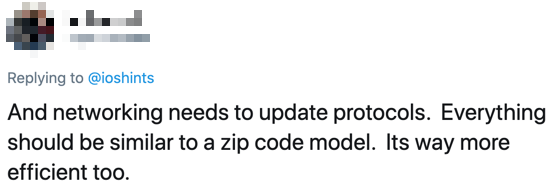
Interestingly, that’s exactly how IP works:
Learning Networking Fundamentals at University?
One of my readers sent me this interesting question:
It begs the question in how far graduated students with a degree in computer science or applied IT infrastructure courses (on university or college level or equivalent) are actually aware of networking fundamentals. I work for a vendor independent networking firm and a lot of my new colleagues are college graduates. Positively, they are very well versed in automation, scripting and other programming skills, but I never asked them what actually happens when a packet traverses a network. I wonder what the result would be…
I can tell you what the result would be in my days: blank stares and confusion. I “enjoyed” a half-year course in computer networking that focused exclusively on history of networking and academic view of layering, and whatever I know about networking I learned after finishing my studies.
You Must Understand the Fundamentals to Be Successful
I was speaking with a participant of an SDN event in Zurich after the presentations, and he made an interesting comment: whenever he experienced serious troubleshooting problems in his career, it was due to lack of understanding of networking fundamentals.
Let me give you a few examples: Do you know how ARP works? What is proxy ARP? How does TCP offload work and why is it useful? What is an Ethernet collision and when would you see one? Why do we need MLD in IPv6 neighbor discovery?
Nerd Fun: The DNS Museum
The DNS Museum documents tons of crazy uses of DNS, the world’s most distributed database (OK, a key-value store), including a “DNS for configuration management” podcast episode with Corey Quinn.
Have fun!
Netmiko vs Ansible: Executing Scripts
My initial “configuring Arista cEOS with Netmiko or Ansible” test was a bit biased. netlab generates the final configuration snippets in both cases (due to Ansible FUBARs we had to deal with), but then Netmiko just sends the configuration commands to the switch (after entering configuration mode), while the Ansible eos_config module executes show running, identifies the difference, and sends only the changes to the device.
While that use case is highly relevant (after all, we’re configuring network devices ;) I really should have done an apples-to-apples comparison, and FRRouting virtual machines are the ideal playground.
Configuring SRv6 Layer-3 Services on Junos
Now that we know what we need to make layer-3 services (BGP-free core transporting IPv4 and IPv6 traffic) work with SRv6, let’s go through the steps needed to configure them on Junos, continuing from the baseline SRv6 with IS-IS configuration (and again relying on the excellent SRv6 Micro-SID (uSID) Basics article by Krzysztof Szarkowicz).
In the BGP-Free Network Core with SRv6, we identified the components we need (assuming IBGP+IGP design):
Crazy Delay: IOS XR OSPFv2 Default Route Origination
I decided to make Netmiko the default configuration deployment method netlab uses for Cisco IOS XR. It works great, and I don’t have to worry about whether the user runs IOS XRd control-plane (in which case scripts work) or vRouter (in which case there’s a VM inside the container, so no luck).
After fixing the initial glitches (more on that another time), all integration tests passed except the OSPFv2 default origination test. It turns out the default waiting time (30 seconds) is way too low; Cisco IOS XR needs almost 90 seconds (after its reboot completes) to originate the OSPFv2 default route.