
Grasp the Fundamentals before Spreading Opinions
I should have known better, but I got pulled into another stretched VLANs for disaster recovery tweetfest. Surprisingly, most of the tweets were along the lines of you really shouldn’t be doing that and that would never work well, but then I guess I was only exposed to a small curated bubble of common sense… until this gem appeared in my timeline:
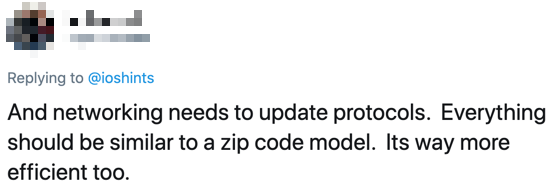
Interestingly, that’s exactly how IP works:
Worth Reading: The Shared Irresponsibility Model in the Cloud
A long while ago I wrote a blog post along the lines of “it’s ridiculous to allow developers to deploy directly to a public cloud while burdening them with all sorts of crazy barriers when deploying to an on-premises infrastructure,” effectively arguing for self-service approach to on-premises deployments.
Not surprisingly, the reality is grimmer than I expected (I’m appalled at how optimistic my predictions are even though I always come across as a die-hard grumpy pessimist), as explained in The Shared Irresponsibility Model in the Cloud by Dan Hubbard.
Yet Again: CLI or API
Carl Montanari recently published an interesting blog post on the punditry of network APIs (including hilarious fact that “SNMP is also an API”), and as someone sent me a link to that post he commented “it reminds me of a few blog posts you wrote a while ago”.
Speaking of those blog posts… last July I was getting bored and put together a list of interesting blog posts I published on that topic. Enjoy!
Podcast: State of Multi-Cloud Networking
In mid-September Ethan Banks invited me to chat about multi-cloud networking in the Day Two Cloud podcast. It was just a few weeks after Corey Quinn published a fantastic Multi-Cloud is the Worst Practice rant, which perfectly matched my observations, so I came well prepared ;)
Weird: Wrong Subnet Mask Causing Unicast Flooding
When I still cared about CCIE certification, I was always tripped up by the weird scenario with (A) mismatched ARP and MAC timeouts and (B) default gateway outside of the forwarding path. When done just right you could get persistent unicast flooding, and I’ve met someone who reported average unicast flooding reaching ~1 Gbps in his data center fabric.
One would hope that we wouldn’t experience similar problems in modern leaf-and-spine fabrics, but one of my readers managed to reproduce the problem within a single subnet in FabricPath with anycast gateway on spine switches when someone misconfigured a subnet mask in one of the servers.
Validate Ansible YAML Data with JSON Schema
When I published the Optimize Network Data Models series a long while ago, someone made an interesting comment along the lines of “You should use JSON Schema to validate the data model.”
It took me ages to gather the willpower to tame that particular beast, but I finally got there. In the next installment of the Data Models saga I described how you can use JSON Schema to validate Ansible inventory data and your own YAML- or JSON-based data structures.
Worth Exploring: bgpstuff.net
Darren O’Connor put together a BGP looking glass with web GUI. Nothing fancy so far… but he also offers REST API interface (because REST API sounds so much better than HTTP).
The REST API calls return text results, so you can use them straight in a Bash script. For example, here’s a simple script to print a bunch of details about your current IP address:
New on ipSpace.net: Virtualizing Network Devices Q&A
A few weeks ago we published an interesting discussion on network operating system details based on an excellent set of questions by James Miles.
Unfortunately we got so far into the weeds at that time that we answered only half of James’ questions. In the second Q&A session Dinesh Dutt and myself addressed the rest of them including:
- How hard is it to virtualize network devices?
- What is the expected performance degradation?
- Does it make sense to use containers to do that?
- What are the operational implications of running virtual network devices?
- What will be the impact on hardware vendors and networking engineers?
And of course we couldn’t avoid the famous last question: “Should network engineers program network devices?”
Worth Reading: Does your hammer own you?
My friend Marjan Bradeško wrote a great article describing how we tend to forget common sense and rely too much on technology. I would strongly recommend you read it and start thinking about the choices you make when building a network with magic software-intent-defined-intelligent technology from your preferred vendor.
Zero-Touch Provisioning with Nornir
In early 2018 I described how Hans Verkerk implemented zero-touch provisioning with Ansible. Recently he rewrote his scripts as a Python-only solution using Nornir. Enjoy!